Detect
Supported ATS events are detected and matched to the correct driver.
 BASIC TRUCKINGLicense • Enforcement • Logbook
Basic Trucking enforcement watches the driving record automatically, applies the configured rules, creates tickets, warns the driver, and can place the vehicle Out of Service when enforcement reaches a hold condition.
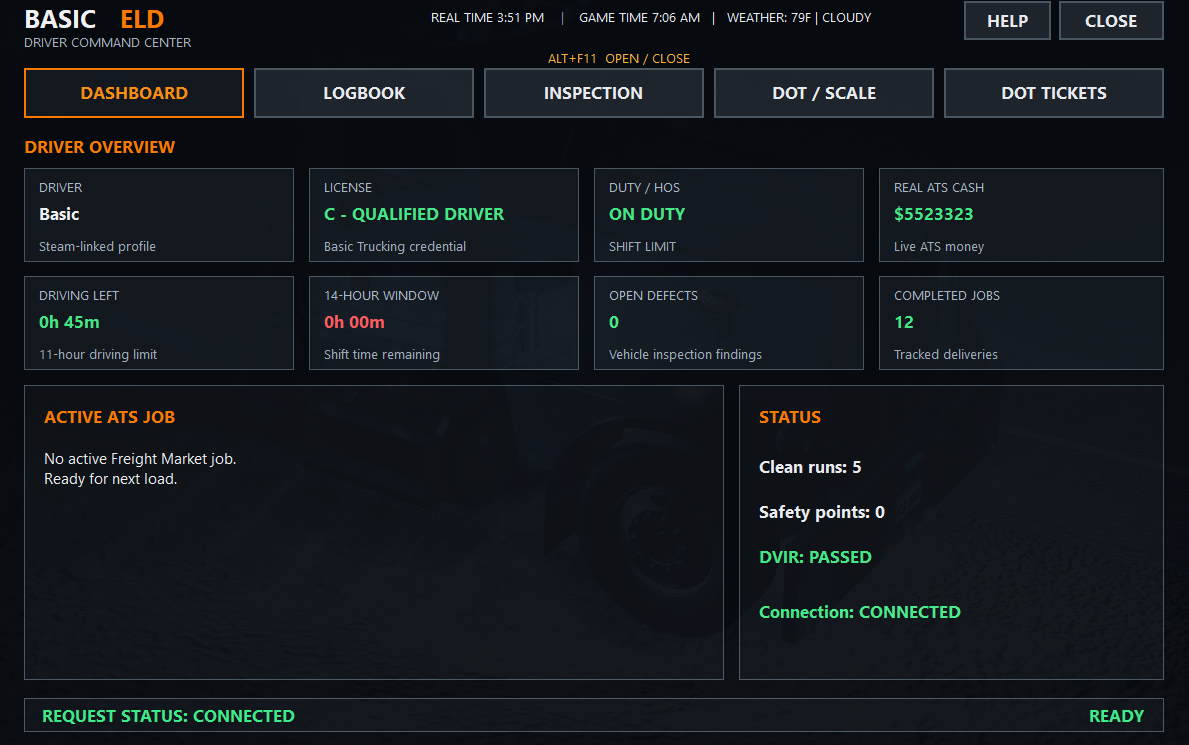
The enforcement system is not just a list of tickets on a website. Supported ATS events feed the driver record, the configured thresholds decide when action is required, and the game-side enforcement state follows that result.
Every step stays attached to the same Basic Trucking driver identity.
Supported ATS events are detected and matched to the correct driver.
Points, offense counts, cooldowns, and replay protection are evaluated.
If a threshold is reached, the system creates the enforcement ticket automatically.
The driver sees the pull-over warning and should slow to a safe stop.
After the warning the hold is armed. Full brake hold applies once the truck is at a safe low-speed or stopped condition, then remains active while the fine is unresolved.
Payment clears the active enforcement condition and returns the driver to service.
When a threshold is reached, the Worker creates the enforcement ticket with the offense category, amount, points/count context, and the reason that triggered it.
Cooldowns, event IDs, and fingerprints help prevent one ATS event from creating the same ticket repeatedly.
Every ticket, fine, warning, and hold belongs to the correct driver record. One driver’s enforcement state does not cross into another driver’s account.
Recent violations can also affect the Driver License safety standing, so enforcement and the license record remain connected.
Qualifying collisions can feed an insurance incident while the enforcement system handles the violation itself.
DOT and logbook findings can also produce citations or Out of Service conditions under their own configured rules.
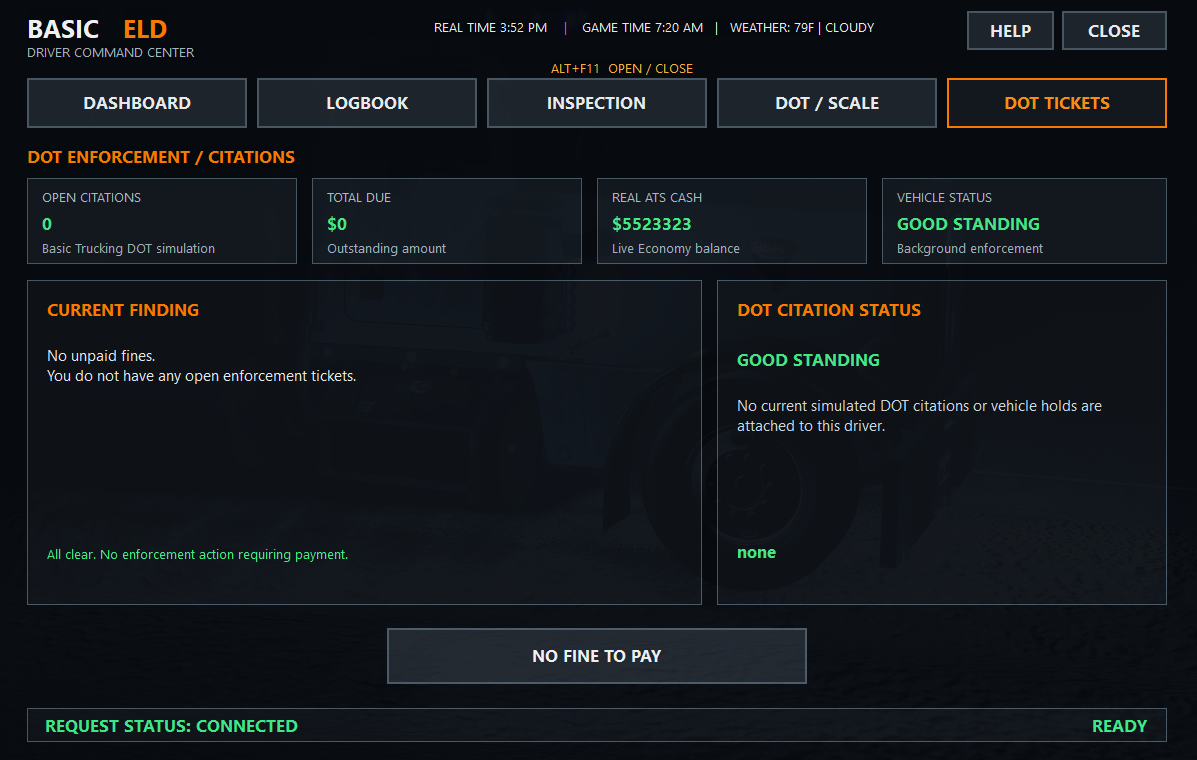
The driver pays through the Basic Trucking driver system. The system verifies the payment, closes the ticket when appropriate, clears the configured enforcement cycle, and releases the vehicle automatically.
When automatic enforcement places a driver Out of Service, the vehicle is halted. The driver remains Out of Service until all active fines are paid and the enforcement condition is cleared.